In 1969, the United States Supreme Court famously declared in Tinker v. Des Moines that students and teachers do not shed their constitutional rights to freedom of speech or expression at the schoolhouse gate. More than five decades later, parents across America are forced to cite that exact legal precedent to stop ideological school administrators from silencing traditional family values in the classroom.
Understanding Student Speech Rights in Public Classrooms
Public schools are government entities bound strictly by the United States Constitution. Because taxpayers fund these institutions, student speech rights and the first amendment in schools remain fully intact throughout the academic day. As we have emphasized in our ongoing coverage of why student rights free speech protections matter across American education, local principals are state actors who do not possess the authority to operate their buildings as private ideological fiefdoms.
The Substantial Disruption Standard vs Administrative Overreach
According to a legal fact sheet by the National Center for Free Speech and Civic Engagement at the University of California, school officials can only restrict protected classroom expression when it threatens to cause a substantial and material disruption to school operations. This legal threshold is intentionally high. Administrators cannot censor a student simply because activist staff members disagree with conservative, religious, or traditional viewpoints.
District officials must prove with concrete facts that the spoken opinion will trigger a measurable breakdown in daily school discipline. Modern educational bureaucrats frequently attempt to bypass this constitutional wall by labeling dissenting political opinions or basic biological realities as offensive. Yet the Supreme Court has made it unmistakably clear that mere intellectual discomfort among peers or teachers never meets the legal threshold for state censorship.
When a principal demands silence without proving a concrete operational disruption, parents have every constitutional right to refuse compliance.
Dress Codes, Compelled Speech, and Viewpoint Neutrality
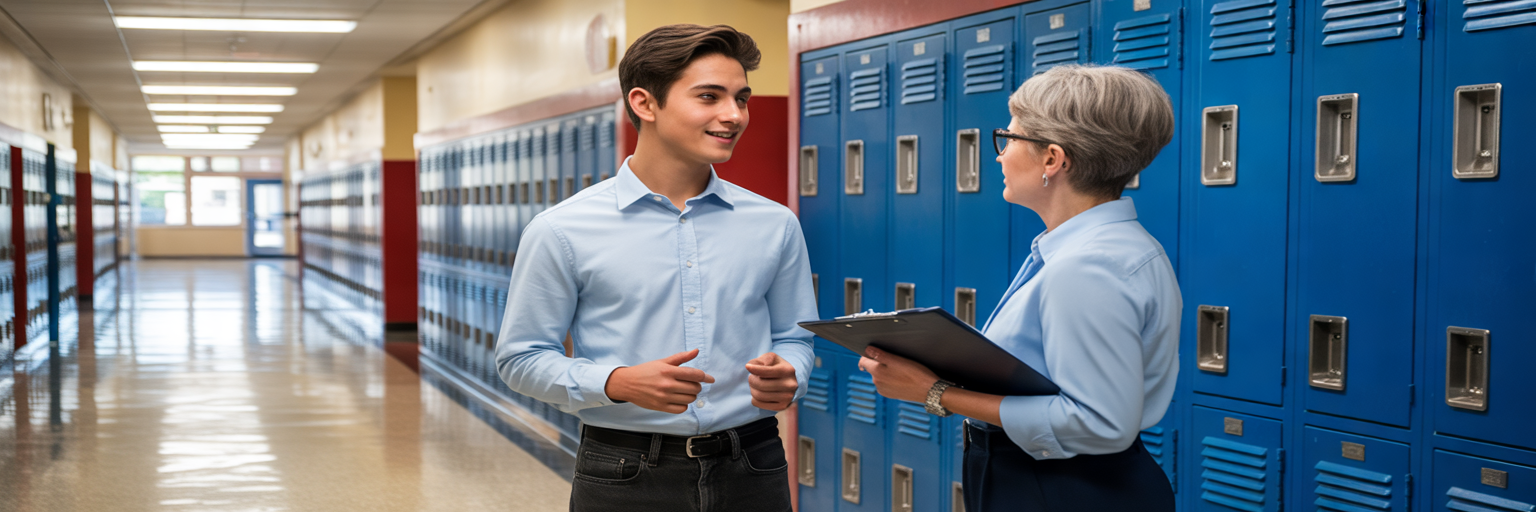
While spoken debates test the limits of classroom tolerance, administrative censorship frequently targets what students wear and what they refuse to say. Families are already stretched thin by how consumer prices hit the american family budget when shopping for compliant school wardrobes and supplies. Mothers and fathers should not have to watch school officials arbitrarily ban those very clothes over political bias.
Selective Dress Code Enforcement
Under established school dress code laws, public districts hold the authority to enforce general appearance standards, such as requiring collared shirts or banning hats inside the building. However, administrators must enforce these rules with strict viewpoint neutrality. A principal cannot legally ban apparel displaying patriotic slogans, religious crosses, or biological truths while permitting progressive activist flags and political messaging in the exact same hallway.
Protecting Conscience Against Compelled Ideological Speech
The Constitution protects the right to remain silent just as fiercely as the right to speak. In the landmark 1943 case West Virginia State Board of Education v. Barnette, the Supreme Court affirmed that the state cannot force a student to recite the Pledge of Allegiance. That exact constitutional shield protects conservative students today from being forced by school officials to affirm ideological statements, preferred pronouns, or political creeds that violate their religious conscience.
Schools only hold legitimate authority to intervene without proving a major disruption when student expression falls into narrow categorical exceptions: speech that is genuinely lewd, vulgar, profane, promotes illegal drug use, or constitutes a true threat to physical safety. Parents can audit whether a dress code or participation policy is being weaponized to selectively silence their child by watching for these four indicators:
- Administrators citing vague community standards or inclusivity goals rather than specific, written dress code violations
- Teachers allowing progressive political symbols on student laptops and backpacks while ordering conservative shirts turned inside out
- Staff members penalizing participation grades when a student respectfully declines to repeat an ideological pledge or preferred pronoun
- Principals claiming that a peaceful religious or patriotic garment causes a disruption solely because another student complained about it
Curriculum Boundaries vs Independent Student Expression
Defending your child against selective dress codes is only half the battle when partisan bias creeps directly into the gradebook. Parents must understand the strict legal dividing line between school sponsored curriculum and a student speaking independently on personal time. Under the Supreme Court precedent established in Hazelwood School District v. Kuhlmeier, courts grant administrators broader authority to curate content in school funded newspapers, official assemblies, or supervised classroom presentations based on legitimate pedagogical goals.
That administrative control vanishes the moment a student speaks independently during lunch, between classes, or inside after school student clubs. A teenager discussing Scripture in the cafeteria or organizing a conservative youth chapter enjoys far stronger First Amendment protection than a student editing a district funded publication.
Combating Viewpoint Bias in Grading and Walkouts
Activist teachers increasingly weaponize academic grading to penalize students who express traditional viewpoints in essays or class discussions. While educators can grade based on grammar, research quality, and adherence to the assignment prompt, lowering a score strictly to punish a conservative conclusion constitutes illegal viewpoint bias. Similarly, districts often expose their double standards during student protests. Peaceful expression during non instructional periods is fully protected, whereas walking out of class violates neutral attendance rules regardless of how much local administrators favor a progressive protest cause.
| School Context | Legal Standard Applied | Permissible School Action | Unconstitutional Overreach |
|---|---|---|---|
| Cafeteria and Hallways | Substantial and material disruption test | Stopping physical fights or severe noise blocking classes | Banning peaceful political conversations or religious prayer |
| Class Assignments and Essays | Legitimate pedagogical and academic standards | Grading based on grammar, research quality, and prompt adherence | Lowering a grade solely because the student argues a conservative viewpoint |
| Student Clubs and Bible Groups | Equal Access Act and viewpoint neutrality | Requiring standard faculty supervision and scheduling rules | Denying club recognition to religious or traditional groups while approving activist clubs |
| Student Walkouts and Protests | Neutral attendance and truancy enforcement | Marking unexcused absences for any student leaving class | Excusing absences for progressive walkouts while punishing conservative demonstrations |
Families can use this legal framework to immediately expose administrative hypocrisy. When a teacher marks down an essay or denies a club application, parents should demand to see the neutral academic rubric or federal Equal Access Act policy applied to other student groups.
Off-Campus Social Media and Digital Speech Limits

Just as educators overstep their authority inside the classroom, many bureaucrats now attempt to police what children say after the final bell rings. In the 2021 ruling Mahanoy Area School District v. B.L., the Supreme Court established firm off campus speech rules confirming that a public school’s disciplinary reach generally ends the moment a child leaves campus. Administrators have no legal right to act as round the clock thought police monitoring a teenager’s personal social media posts, political memes, or private text messages shared from home.
Where School Jurisdiction Ends and Parental Authority Begins
This legal boundary goes to the very heart of parental rights in education. Monitoring, guiding, and disciplining a child’s behavior at home and online is the fundamental duty and exclusive right of mothers and fathers, not an overreaching school board. Given our recent economic analysis on why college tuition inflation punishes parents who sacrifice for years to fund higher education, families cannot allow a rogue principal to tarnish a teenager’s permanent academic record over a lawful opinion posted from home.
As detailed in a legal guide published by the Education Law Center, off campus digital speech can only trigger legitimate school intervention under narrow, strict exceptions: severe targeted harassment of an individual, true threats of violence, academic cheating, or direct breaches of school computer security. Even in virtual learning environments, behavior visible on a live webcam or inside an official digital classroom chat falls under school oversight only if it directly disrupts remote instruction.
If an administrator attempts to punish your child for lawful political or religious opinions expressed from your living room, remind them immediately that the school board does not have jurisdiction over your home.
Actionable Steps for Parents Defending Constitutional Rights
Knowing the law means nothing if families do not enforce it when school officials cross the line. Putting a stop to administrative overreach requires a disciplined, tactical response rather than an emotional argument in the front office.
Public vs Private School Legal Realities
Before launching a constitutional challenge, parents must account for the legal distinction between public and private education. While families reviewing a parents checklist for managing price spikes often weigh the financial commitment of private school choice programs, they must remember that private and parochial schools are not government actors bound by the First Amendment. In private institutions, student speech and conduct are governed entirely by the enrollment contract signed by the parents.
A Step by Step Escalation Protocol for Families
Public school parents, however, hold the full weight of the Constitution behind them. Start by auditing your local student handbook and school board policies at the beginning of the academic year, looking specifically for vague hate speech or inclusivity clauses that violate Supreme Court standards. When your child’s protected speech is censored at a public school, execute these five escalation steps immediately:
- Document the incident immediately in writing, recording exact dates, times, confiscated items, and the names of all staff members and student witnesses involved.
- Demand a formal written explanation from the teacher or administrator citing the exact board policy violated and the concrete evidence of substantial classroom disruption.
- Submit a written constitutional rebuttal to the principal and district superintendent, placing it in your child’s file while citing Supreme Court precedents like Tinker and Mahanoy.
- Speak publicly on the official record during the next local school board meeting to expose the administrative overreach to taxpayers and local media.
- Contact national constitutional legal defense organizations to issue a formal demand letter if the school district refuses to reverse the unconstitutional punishment.
Bureaucrats rely on parental silence to push their ideological agendas, so stand firm, know your rights, and fiercely defend constitutional liberty in your child’s classroom.