Initial Reports from Temple Israel
On the afternoon of March 12, 2026, a scene of chaos and fear unfolded in West Bloomfield, Michigan, as law enforcement agencies converged on Temple Israel following reports of an active shooter. The first 911 calls, received shortly after 2:00 PM local time, triggered a massive and immediate police response to what authorities quickly confirmed was an active shooter Michigan event.
Temple Israel, located on Walnut Lake Road, is not just a synagogue but a cornerstone of the large Metro Detroit Jewish community. It serves as a center for worship, education, and social gatherings, making the attack a strike against a deeply significant local institution. As the situation developed, initial reports from sources like Crain’s Detroit confirmed a heavy police presence descending on the area, with officers establishing a wide perimeter to contain the threat.
The West Bloomfield Police Department, in its first public statements, urged residents to shelter in place and avoid the vicinity of Temple Israel West Bloomfield entirely. They confirmed they were responding to an active threat but, in the critical early hours, refrained from providing details on potential casualties, the number of assailants, or a possible motive. This careful dissemination of information is standard protocol, designed to prevent panic and the spread of unverified rumors while tactical operations are underway.
As a precaution, nearby schools and businesses were placed on immediate lockdown. The jarring sound of sirens replaced the typical suburban quiet, and roads surrounding the synagogue were closed, creating a tense and uncertain atmosphere. Law enforcement officials emphasized that their primary objective was to secure the location and neutralize the threat to public safety.
The initial hours were marked by a deliberate and methodical approach from authorities on the ground. Information remained fluid, with officials stressing that the situation was still active and developing. For the community watching from behind locked doors and on news feeds, the first phase of the crisis was defined by fragmented information and a profound sense of vulnerability as they awaited confirmed details from the authorities managing the scene.
Massive Law Enforcement and Emergency Mobilization
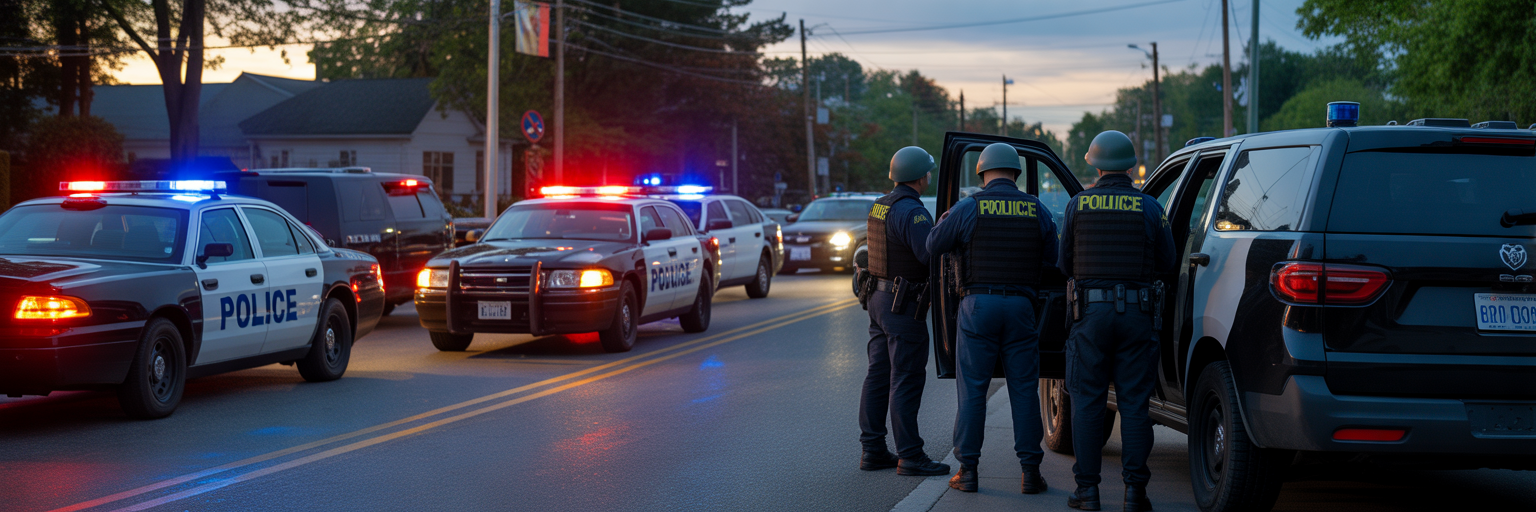
The response to the incident at Temple Israel was a clear demonstration of multi-agency coordination under extreme pressure. Within minutes of the initial calls, a complex and layered mobilization began, involving local, state, and federal partners. The West Bloomfield Police Department and the Oakland County Sheriff’s Office were the first on the scene, quickly joined by the Michigan State Police. The gravity of the situation was underscored by the arrival of federal agencies, including the FBI and the Bureau of Alcohol, Tobacco, Firearms and Explosives (ATF), signaling a response prepared for a prolonged and serious engagement.
This immense effort was coordinated through a unified command post established near the site. From this central hub, leaders directed a highly organized tactical operation. The response involved several key components:
- Establishment of a unified command post to streamline communication and decision making among the different agencies, ensuring a cohesive strategy rather than a fragmented one.
- Deployment of specialized units, including SWAT teams from multiple jurisdictions, who are trained for high-risk entries and methodical clearing operations in complex structures.
- Use of tactical equipment such as armored vehicles, which provided essential protection for officers as they established and tightened the perimeter around the synagogue.
- Aerial surveillance from helicopters, giving commanders a crucial overhead view of the property to monitor movement and secure the extensive grounds of the temple.
In parallel, a significant emergency medical response was staged nearby. Paramedics and ambulances from multiple health systems were positioned in designated safe zones, ready to move in and treat victims the moment law enforcement declared an area secure. This staging protocol is a hard-learned lesson from past mass casualty incidents, balancing the urgent need for medical care with the unacceptable risk of sending first responders into an active threat zone.
The synagogue itself presented a formidable tactical challenge. As a large, multi-room facility with numerous corridors, offices, and worship spaces, it required a slow and deliberate clearing process to ensure no threats were overlooked. Each room had to be systematically breached, secured, and declared safe, a painstaking task that demands immense discipline and courage. The tactical precision required in such scenarios is a stark reminder of the dangers officers face, similar to other volatile situations, such as when a California preacher doesn’t flinch as an activist points an apparent gun at his head. The professionalism and immense resources marshaled in West Bloomfield highlighted the serious preparation that modern law enforcement undertakes for such devastating events.
The West Bloomfield Community on High Alert
As law enforcement managed the tactical situation, the community of West Bloomfield was plunged into a state of fear and uncertainty. An affluent suburb of Metro Detroit, West Bloomfield is home to one of the region’s most prominent Jewish populations. For them, Temple Israel is far more than a building; it is the heart of their community life, a place for celebration, mourning, education, and identity. The attack was not just on a structure, but on the very fabric of their shared existence.
The atmosphere across the township grew heavy with anxiety. Streets normally busy with afternoon traffic fell silent under a shelter-in-place order. Parents rushed to confirm the safety of their children at locked-down schools, their frantic calls and texts painting a portrait of collective panic. The typical rhythms of suburban life came to an abrupt halt as businesses closed their doors and residents stayed glued to any source of West Bloomfield news they could find.
This crisis also highlighted the complex role of social media. For many, it was the fastest source of updates, offering real-time glimpses of the police perimeter and official statements. Yet it also became a breeding ground for misinformation, with unverified rumors about the number of shooters and casualties spreading rapidly, amplifying the community’s distress. Discerning fact from fiction became a challenge in itself, adding another layer of stress to an already traumatic afternoon.
The lockdown affected all aspects of community life, from schools and parks to the daily operations of local healthcare providers and other essential services that form the backbone of the suburban landscape. The sense of violation was profound. A sacred space, designed to be a sanctuary of peace and welcome, had become a scene of violence. This jarring reality left many feeling that no place was truly safe, shaking the community’s fundamental sense of security and peace.
Official Statements and Political Reactions
While tactical operations were still underway, the political and public response to the Michigan synagogue shooting began to take shape. Within hours, statements of condemnation, grief, and solidarity poured in from officials at every level of government. Michigan’s Governor and Attorney General were among the first to issue messages, expressing horror at the attack, offering condolences to the victims and their families, and praising the swift and courageous response of law enforcement.
The mayor of West Bloomfield and local members of Congress echoed these sentiments, emphasizing their support for the Jewish community and pledging all available resources to aid in the investigation and recovery. A common thread in these initial reactions was a careful but firm condemnation of the violence. Some officials immediately framed the incident as a likely hate crime, a characterization that begins to shape public perception and sets the stage for the legal and social response to follow. The language used by officials in the hours after the attack is critical in shaping the public narrative, a dynamic also seen in other heated political debates, such as when Rep. Jasmine Crockett calls Greg Abbott ‘Hot Wheels,’ which some observers felt represented a new low in political discourse.
National advocacy groups, particularly Jewish organizations like the Anti-Defamation League (ADL) and the American Jewish Committee (AJC), also responded swiftly. Their statements placed the attack in a broader context, connecting it to a disturbing rise in antisemitism across the country. They called for solidarity and vigilance, demanding that the incident be investigated as an act of domestic terrorism and a hate crime.
These early statements serve a dual purpose. They offer comfort and reassurance to a terrified community while simultaneously igniting the inevitable political debates that follow such tragedies. Even as the immediate crisis at Temple Israel continued to unfold, the groundwork was being laid for future discussions on gun control, hate crime legislation, and the security of community institutions. The attack was not just a local crime; it was immediately a national issue.
Contextualizing the Attack Amidst Rising Antisemitism
To view the attack on Temple Israel as an isolated incident would be to ignore a deeply troubling national pattern. Regardless of the shooter’s specific motivations, which will become clearer in the coming days, this act of violence occurred against a backdrop of surging antisemitic attacks US-wide. Data from both the FBI and the Anti-Defamation League has consistently shown a sharp increase in hate crimes and extremist rhetoric targeting Jewish communities, creating an environment where such violence becomes tragically more conceivable.
This event does not stand alone. It joins a painful list of attacks on Jewish institutions that have scarred the American landscape in recent years. This pattern of hate includes:
- The 2018 mass shooting at the Tree of Life synagogue in Pittsburgh, which claimed eleven lives in the deadliest antisemitic attack in U.S. history.
- The 2019 shooting at the Chabad of Poway synagogue in California, where a gunman motivated by white supremacist ideology killed one and injured three others.
- Numerous other foiled plots and smaller-scale assaults on synagogues, Jewish community centers, and individuals, often fueled by online radicalization and extremist ideologies.
These institutions are often described by security experts as “soft targets.” By their very nature, houses of worship aim to be open and welcoming, a mission that stands in direct conflict with the high-security measures needed to thwart a determined attacker. This vulnerability is exploited by extremists who seek to terrorize communities where they feel most secure and at peace.
The psychological toll on the American Jewish community is immense. Each new attack reopens old wounds and reinforces a collective trauma. It fuels a pervasive sense that antisemitism is not a relic of the past but an urgent and present danger. The need for security guards, reinforced doors, and active shooter drills has become a grim reality for congregations across the country. This incident is a stark reminder of the complex societal challenges facing the nation, and readers can explore more coverage of current events on our platform. The violence in West Bloomfield is a symptom of a larger disease of hate that continues to threaten the safety and soul of the nation.
The Enduring Debate on Security for Sacred Spaces
The attack on Temple Israel immediately thrusts the difficult conversation about securing places of worship back into the national spotlight. In the aftermath of such a tragedy, communities are forced to confront a painful dilemma: how to protect themselves without sacrificing the open, welcoming spirit that defines them. This challenge has led to a range of security strategies, each with its own benefits and trade-offs.
Many synagogues and other religious institutions have already implemented enhanced security measures, often with financial assistance from government initiatives like the Department of Homeland Security’s Nonprofit Security Grant Program. This program provides funding for “target hardening” equipment and security planning, but the demand for these grants far outstrips the available funds. The common approaches vary widely in cost and philosophy.
| Security Measure | Primary Goal | Key Considerations & Trade-offs |
|---|---|---|
| Professional Security Guards | Visible deterrence and immediate armed response. | High recurring cost; can feel unwelcoming or institutional. |
| Volunteer Security Teams | Community-led monitoring and rapid internal communication. | Requires extensive training; variable skill levels; potential legal liability. |
| Physical Fortifications (e.g., reinforced doors, ballistic glass) | Delaying or preventing unauthorized entry during an attack. | High upfront cost; can conflict with building aesthetics and sense of openness. |
| Government Grants (e.g., DHS NSGP) | Funding for security equipment, training, and planning. | Highly competitive application process; funds are for specific uses and not operational costs. |
| Collaboration with Local Law Enforcement | Faster response times and better intelligence sharing. | Dependent on local police resources and priorities; requires ongoing relationship-building. |
Note: This table outlines common strategies for securing places of worship. The optimal approach often involves a layered strategy combining several of these measures, tailored to the specific institution’s budget, size, and risk profile.
A particularly contentious part of this debate revolves around arming congregants or clergy. Proponents argue it is the most effective means of self-defense against an active shooter, providing an immediate response in the critical moments before police arrive. However, opponents raise serious concerns about the risks of accidental shootings, insufficient training, and fundamentally altering the peaceful nature of a sacred space.
Ultimately, physical security measures are a reactive solution to a much deeper problem. They are necessary shields, but they do not address the root causes of the hatred that motivates such attacks. A truly comprehensive approach must include proactive societal strategies aimed at countering extremism, promoting education, and addressing the systemic issues that allow hate to fester. Ultimately, addressing these threats requires looking at systemic problems, much like the scrutiny applied when a $18M migrant housing contract was scrapped over an empty facility, raising questions about oversight and execution. The core challenge remains: ensuring physical safety without building fortresses that wall communities off from the world and from each other.