Between early 2020 and late 2024, supermarket prices across the United States jumped by 25.1 percent, leaving household paychecks struggling to keep pace. Understanding why grocery bills outrun family food plans requires looking closely at flawed federal benchmarks, persistent inflation, and retail traps.
Why Grocery Bills Outrun Family Food Plans and Federal Models
Washington bureaucrats love spreadsheets, yet their models collapse the moment an actual parent steps up to a supermarket register in 2026. Right now, the average family grocery cost for a household of four ranges from $1,025 to $1,683 per month. That brutal checkout total exposes why grocery bills outrun family food plans built by out-of-touch federal agencies.
The Flaw in Federal Scratch Cooking Assumptions
According to research from the USDA Food and Nutrition Administration, federal benchmarks estimate baseline nutrition budgets by assuming 100 percent of meals are cooked entirely from scratch at home. When policymakers calculate USDA Thrifty Food Plan costs, they completely ignore the clock. Two-income parents juggling commutes, homework, and youth sports do not have four hours every evening to bake bread, soak dried beans, and butcher whole chickens.
The Reporting Gap on Family Bank Statements
This time crunch creates a massive reporting gap on monthly bank statements. While government economists isolate raw ingredients in a spreadsheet, working parents see a different reality when using our parent checklist for managing price spikes to audit their real cash flow. Actual family bank statements blend big supermarket runs, quick weeknight takeout between ballgames, and occasional grocery delivery fees into one jarring figure.
| Budget Factor | USDA Food Plan Model | Actual Family Reality (2026) |
|---|---|---|
| Meal Preparation | 100% cooked from scratch at home | Mix of home cooking, quick takeout, and prepared foods |
| Monthly Cost (Family of 4) | Strict baseline benchmark projections | $1,025 to $1,683 depending on plan tier and local taxes |
| Non-Food Items | Excluded entirely from calculations | Blended on the same receipt (paper goods, soap, pet food) |
| Time Investment | Assumes unlimited hours for prep and cleanup | Constrained by two-income workweeks and school schedules |
Data reflects 2026 USDA Food Plan methodology compared against standard household bank statement categories for a family of four.
The takeaway is unmistakable: federal food models operate in a theoretical vacuum that fails to account for how working American families actually buy and consume food.
Persistent Inflation and the Erosion of Purchasing Power
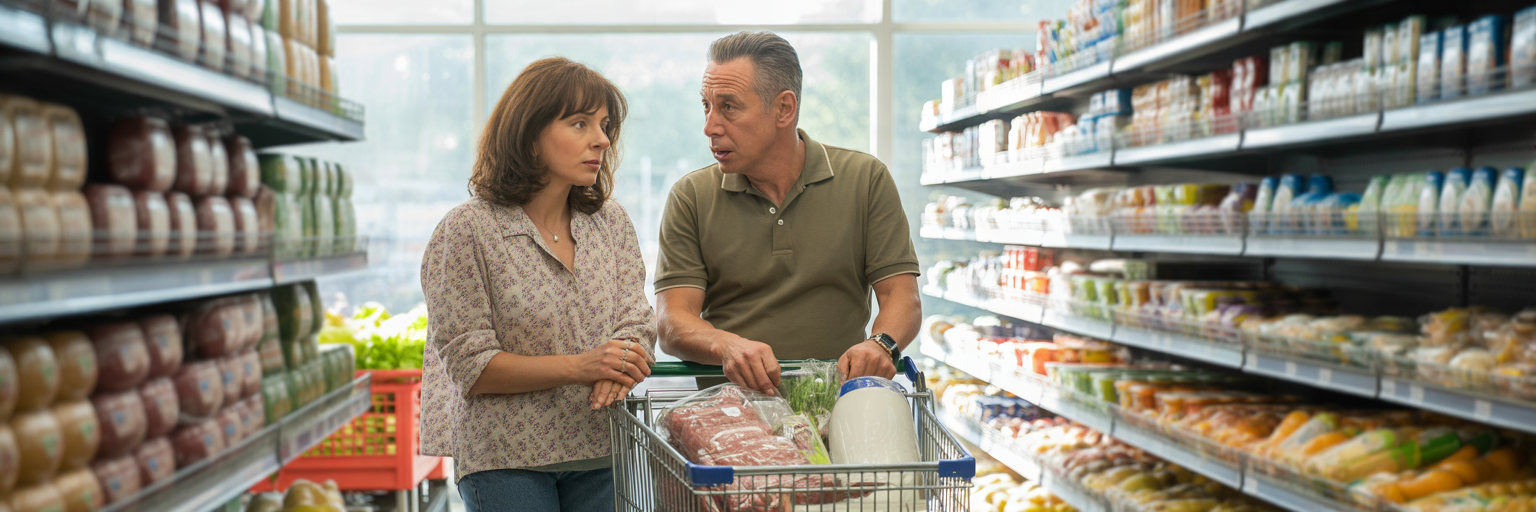
Flawed government spreadsheets are only half the problem when reckless macroeconomic policies actively destroy the value of the dollar in your wallet. Years of runaway federal spending have turned a routine trip down the dairy aisle into a test of financial survival.
Why Cooling Inflation Claims Ring Hollow at the Register
Legacy media anchors routinely celebrate a slower rate of price growth, yet those talking points ring completely hollow at the register. As highlighted in Business Insider’s reporting on household grocery budgets, supermarket prices surged 25.1 percent between early 2020 and late 2024, easily outpacing the 18.9 percent rise in overall consumer prices. A slower rate of inflation does not mean prices are dropping. It means families are permanently stuck paying prices anchored well above the 2022 inflationary peak. Evaluating the true food inflation impact on families requires looking at our guide on how workers can measure pay against inflation, which shows how flat wages get crushed by cumulative grocery hikes.
Cost Neutral Mandates and Agricultural Fuel Pressures
Meanwhile, Washington plays politics with the numbers. Following the 2021 update to the USDA Thrifty Food Plan, strict legislative mandates required future compositional adjustments to remain cost-neutral. By capping the formula, lawmakers restricted official benchmarks from reflecting the full force of supply-chain shocks. Out in the American heartland, elevated diesel prices and punitive energy policies hammer every tractor, processing plant, and refrigerated semi-truck moving food across state lines. This ongoing consumer prices inflation acts as a hidden tax on every dinner table in the country.
Ultimately, cumulative inflation and bureaucratic cost-neutrality rules have permanently widened the gap between official budget targets and real-world checkout totals.
How Recipe-First Meal Planning Quietly Drains Your Wallet
When inflation squeezes the bank account, families naturally look for practical ways to fight back at home. Lifestyle influencers and personal finance blogs endlessly preach that strict, recipe-first weekly meal planning is the ultimate defense against high food costs. In practice, sitting down on Sunday to pick seven distinct recipes from a cookbook or social media feed often destroys a tight budget before you even grab a shopping cart.
To be fair, structured meal plans do help exhausted parents avoid the fifty-dollar drive-thru trap on a busy Tuesday night. However, blindly building a grocery list around complex recipes without auditing existing kitchen inventory creates an expensive cycle of waste. Recipe-driven shopping forces households to purchase five to seven new specialty items every single week. You end up buying a ten-dollar jar of tahini, exotic grains, or fresh herbs for one specific dish, only to watch the leftovers rot in the back of the refrigerator a month later.
Even worse, frequent list-driven trips expose parents to predatory supermarket engineering. Retail data shows that impulse purchases account for a staggering 62 percent of grocery store revenue. Every time you run back to the store for a missing recipe ingredient, you walk right into a multi-billion-dollar psychological trap designed to separate you from your cash.
- Single-Use SKU Creep: Buying niche condiments, spice blends, and specialty oils required for one recipe that sit unused for the rest of the year.
- Recipe Portion Mismatches: Purchasing pre-packaged two-pound produce bags or bulk meat packs when a recipe only calls for half a cup or eight ounces.
- Store Layout Impulse Triggers: Navigating past high-margin endcaps, bakery aromas, and checkout displays that drive 62 percent of retail store revenue.
- Orphaned Ingredient Spoilage: Throwing away half-used bunches of cilantro, specialty cheeses, and open broths because the next week’s recipes demand an entirely different flavor profile.
The bottom line for budget-conscious parents is clear: rigidly shopping for specific recipes backfires by introducing expensive, single-use ingredients and exposing shoppers to retail impulse traps.
The Hidden Costs of Non-Food Essentials and Supply Pressures
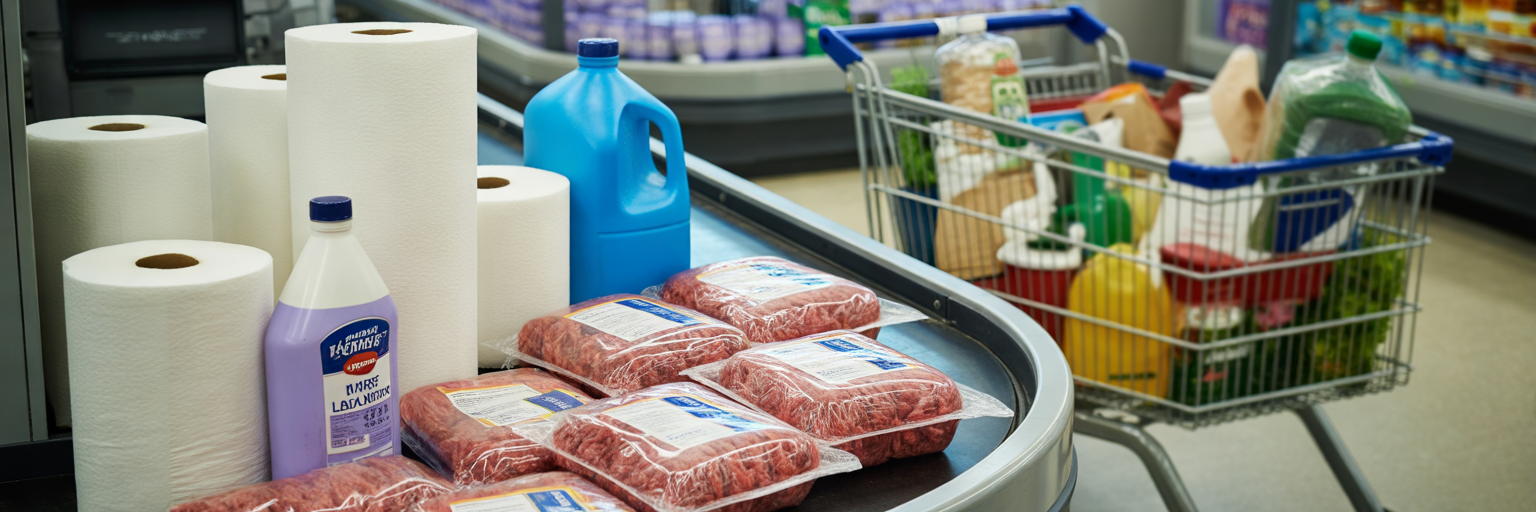
Even if a family masters their kitchen habits and dodges every endcap display, the final register receipt still delivers a sticker shock that food-only calculators ignore. That happens because the neighborhood supermarket is no longer just a place to buy meat and potatoes.
The Non-Food Receipt Blind Spot
When you swipe your debit card at the grocery checkout, the transaction total pulls straight from your food budget, even though a massive portion of the cart isn’t edible. Families are buying heavily inflated paper towels, laundry detergent, trash bags, toiletries, and pet food right alongside their milk and bread. Just as we pointed out in our analysis on why renters need an inflation calculator to track hidden housing fees, parents must recognize how non-food consumables silently cannibalize the weekly grocery allowance.
Shrinkflation and Agricultural Regulatory Burdens
At the same time, corporate food giants are quietly gaming the packaging. Through the stealth tactic of shrinkflation, companies trim ounces off cereal boxes, coffee canisters, and bacon packs while keeping the shelf price identical. For parents feeding growing teenagers, a shrunken family-size box simply does not stretch across a week of breakfasts. You are forced to buy two packages instead of one just to put the same amount of calories on the table.
Compounding this corporate sleight of hand is a relentless wave of federal regulatory burdens targeting domestic agriculture and energy production. When Washington imposes strict environmental mandates on cattle ranchers, restricts fertilizer access, and drives up the cost of running farm equipment, those compliance costs trickle straight down to the consumer. You see the penalty directly in the baseline price of American staples like beef, eggs, and dairy.
Simply put, true supermarket spending includes unavoidable household essentials and shrinkflation penalties that narrow food-only calculators conveniently ignore.
Practical Strategies to Reclaim Control of the Household Budget
Politicians will keep blaming corporate greed while printing more money, and federal agencies will keep publishing fantasy spreadsheets. Self-reliant families know better than to wait on a bailout. Adopting a traditional, disciplined routine centered on pantry first meal planning is the fastest way to reduce monthly grocery spending without sacrificing nutrition. By building weekly dinners around the meat in your freezer and the cans on your shelf before ever stepping foot in a store, an average household can immediately save $80 to $150 every single month.
- Audit Your Kitchen Inventory First: Before writing a single item on a shopping list, take ten minutes to inspect your freezer, fridge, and pantry shelves. Force yourself to build three to four meals around the proteins and dry goods you already paid for last month.
- Split Your Supermarket Receipts: Stop letting toilet paper and dog food disguise your true nutrition costs. Separate non-food household essentials at the checkout belt or highlight them on the paper receipt so your monthly bank statement audit reflects actual food spending versus household supplies and takeout.
- Buy Versatile Staples in Bulk: Ditch single-use recipe shopping and stock up on multi-purpose whole foods like ground beef, whole chickens, rice, potatoes, eggs, and frozen vegetables. Fewer trips down the center aisles immediately shield your wallet from the 62 percent retail impulse-buy trap.
- Source Directly from Local Ranchers and Farmers: Cut out corporate middlemen and shrinkflation games by purchasing beef shares, whole hogs, fresh eggs, and seasonal produce directly from local American farmers and agricultural co-ops.
Here at Like A Boss, we believe financial freedom starts with ruthless household accountability. American families cannot wait for Washington to fix inflation, but switching to inventory-first cooking and strict expense tracking immediately restores household financial discipline.