Why I Pay Rent on a House I Already Own
I remember the day I sent the final mortgage payment. After thirty years of working, saving, and sacrificing, the house was finally mine. No more bank. No more debt. Just the quiet satisfaction of knowing that this piece of America, this roof over my family’s head, belonged to me. It was a feeling of security, of permanence. I thought I was free. Then, a few months later, the county’s property tax bill arrived in the mail. It was a cold, hard reminder that I wasn’t free at all. I don’t have a landlord, but I still pay rent to the government just to live in the house I already own.
Every year, I write a check for thousands of dollars to the local government for the privilege of existing on my own land. They call it a tax, but let’s be honest about what it is. It’s a perpetual lease. If I fail to pay this “rent,” men with badges will eventually show up, sell my home on the courthouse steps, and throw me out. It doesn’t matter that the mortgage is paid off. It doesn’t matter that I’ve been a responsible citizen my entire life. In the eyes of the government, I am not an owner. I am a tenant.
Now, the politicians and bureaucrats will tell you this money is for a good cause. They say it funds our schools, pays for the police and fire departments, and maintains the roads. I’m not against having schools or firefighters. We all benefit from those things. But why am I, a homeowner, forced to carry this specific, unending burden for services that everyone in the community uses? Renters use the roads. Tourists call the police. People who don’t own property send their kids to public schools. Yet, the system is designed to put a lien on my home, and only my home, to pay for it all. It’s a fundamentally broken and unjust model. The promise of homeownership in this country feels like a bait and switch. You work your whole life to buy a piece of the American Dream, only to find out the government holds the real deed.
The Conservative Case for Real Property Rights
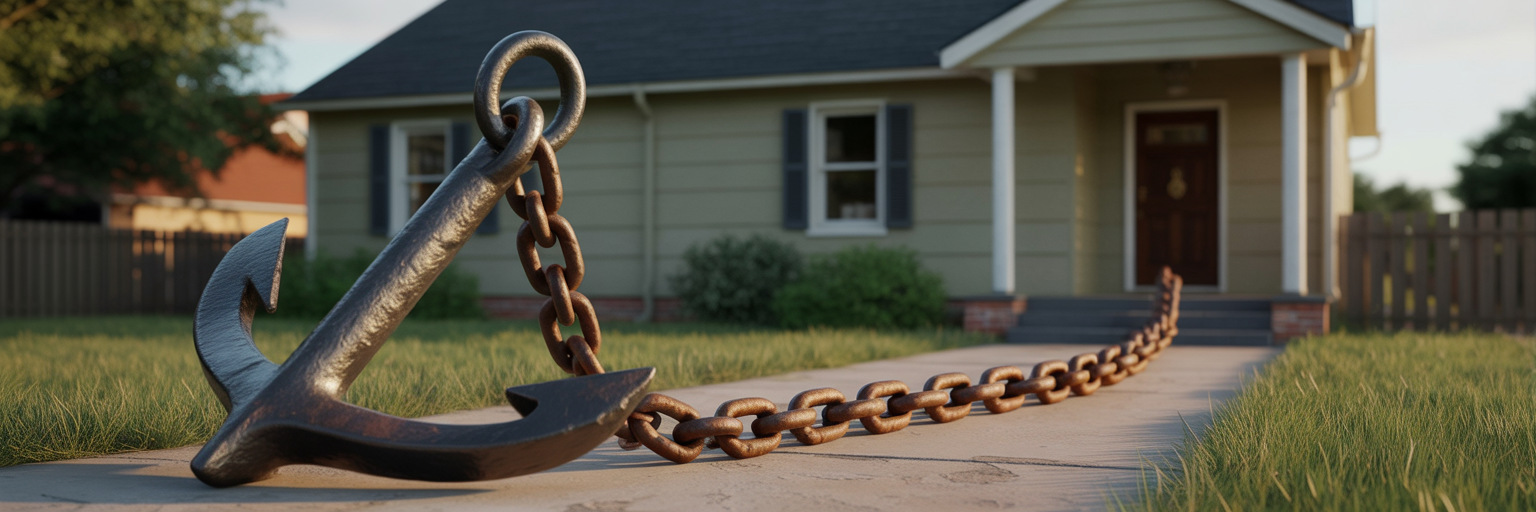
My frustration isn’t just about the money. It’s about the principle. The entire concept of an annual property tax on a home you own outright is an assault on the very idea of private property. In a free country, ownership should be absolute. Once you’ve paid for something, it is yours. The government should have no claim to it and certainly no power to take it away because you failed to pay an annual fee for the right to keep it. This ongoing debate over property tax vs private property rights strikes at the heart of what it means to be a free citizen.
This isn’t a complicated idea. It’s rooted in the core conservative principles that built this nation. When you break it down, the conflict becomes crystal clear:
- Private Property Rights: The right to own property without government interference is the bedrock of a free and prosperous society. It’s what separates us from socialist and communist states where the government owns everything. A perpetual tax turns this right into a conditional privilege.
- Limited Government: The power to tax a home indefinitely gives local government a permanent and dangerous foothold in the lives of private citizens. It creates a dependency that allows government to grow bloated and unaccountable, knowing it has a guaranteed stream of revenue extracted from homeowners.
- Individual Liberty: How can you be truly free if the government can make you homeless? The threat of losing your home for failing to pay a tax on something you already own is a powerful tool of control. It keeps you tethered to the state, forever a subject rather than a sovereign citizen.
The most shameful result of this system is seeing senior citizens, people who have worked and paid taxes their entire lives, forced out of their homes. They live on fixed incomes, and as property values and taxes skyrocket, they can no longer afford the “rent” on the homes they paid off decades ago. They lose everything because of a tax bill. Is that the America we want to live in? A country where you can do everything right and still end up with nothing?
When you own your home, you expect a level of security and permanence. The pride of ownership is tied to the idea that you have built something lasting for your family, a concept that is fundamental to those undertaking new home builds, yet this is undermined by the constant threat of property taxes. So, is property tax unconstitutional? While courts may have upheld it, I believe it violates the spirit of our nation’s founding. The founders fought a revolution against a king who believed he had an indefinite claim on the property and labor of his subjects. Property taxes are just a modern, localized version of that same tyranny. It’s a betrayal of the promise of liberty that this country is supposed to represent.
A Clear Line Between a Home and a Business
Let me be perfectly clear about something, because I know how the other side likes to twist our arguments. This is not a call to eliminate all property taxes for everyone and everything. My argument is specific, and it’s grounded in common sense. We must draw a bright, clear line between a person’s home and a commercial enterprise. The principles I’m defending apply exclusively to a family’s primary, owner-occupied residence.
A home is not a business. It is the center of family life, a sanctuary from the world, and the foundation of personal security. It doesn’t generate income. In fact, it does the opposite. It’s the biggest expense most families will ever have. Taxing a person for simply living in their own home is fundamentally different from taxing a business that uses property to make a profit.
Rental properties, vacation homes that are leased out, apartment complexes, and commercial real estate portfolios are business assets. They are tools for generating income. As such, they should be taxed like any other business. Landlords and real estate investors are engaged in commerce. They deduct expenses, calculate profits, and operate in the marketplace. It is entirely appropriate for their income-producing assets to be part of the tax base. I am not advocating for a tax-free ride for corporations or wealthy investors with dozens of properties. This is about protecting the family home, period.
This distinction is critical because it exposes the lie that we are trying to create a loophole for the rich. The opposite is true. The current system hurts working and middle-class families the most, while large-scale investors can often absorb or pass on the cost of property taxes. By focusing this fight on the primary residence, we are defending the average American, not the powerful. This principled stance on protecting homeowners is a cornerstone of a broader political vision, one that resonates with many Americans who feel left behind by the current political establishment. This sentiment is often reflected in the support for figures like Donald Trump, who champion the cause of the everyday citizen. Our goal is not to blow up the tax base. It is to restore fairness and protect the American family’s ability to truly own their home without being treated like a tenant by the state.
Florida’s Fight for True Homeownership
For years, this conversation felt like shouting into the wind. Frustrated homeowners like me would complain at the kitchen table or in online forums, but it seemed like no one in power was listening. That’s starting to change. We are finally seeing real political momentum, and it’s coming from a state that has become a beacon of freedom and common sense: Florida.
In Florida, the discussion around the Florida property tax elimination for primary residences is no longer a fringe idea. It’s a serious policy conversation being driven by the state’s leadership. Governor Ron DeSantis has publicly supported the idea of significant property tax reform, with some proposals even aiming for full elimination on homesteads, a move that has energized homeowners across the state and captured national attention, as reported by Florida Today. This is not a finalized law yet, but the fact that it’s being explored at the highest levels of a major state government is a monumental development. It proves that our concerns are not just valid, but politically viable.
This is the property tax conservative argument moving from theory into practice. It shows that a state can take these principles of liberty and private property rights seriously and begin crafting actual legislation to protect its citizens. The conversation in Florida resonates so deeply because it validates what millions of us have been saying for years. Our leaders are finally acknowledging that the current system is unsustainable and unfair. They are looking for ways to provide real, tangible relief to families instead of just offering more empty promises.
Florida is creating a blueprint for every other red state to follow. They are demonstrating that you can challenge the status quo and champion the taxpayer without the sky falling. The discussion there isn’t just about cutting taxes; it’s about fundamentally rethinking the relationship between the citizen and the state. It’s about restoring the idea that when you buy a home, you own it, and the government doesn’t get to charge you rent forever. The movement is growing. The conversation has moved from our living rooms to the state capitol. Florida is showing us that winning this fight is not just a dream. It’s an achievable goal, and it’s time for conservatives across the country to demand that their states follow Florida’s lead.
Protecting Seniors and Working Families from Tax Burdens
When politicians in their ivory towers debate tax policy, they often forget the human faces behind the numbers. For them, property tax is just a line item on a budget spreadsheet. For millions of Americans, it’s a source of constant anxiety and a genuine threat to their stability. This fight is about protecting the most vulnerable among us from a predatory system.
Think about a retiree in your neighborhood. Maybe it’s a widow who has lived in her house for 40 years. She and her husband worked their entire lives, paid off their mortgage, and planned for a quiet, modest retirement on a fixed income. They played by all the rules. But now, because developers are building luxury condos nearby, her property assessment has shot through the roof. Her tax bill has doubled, and her Social Security check hasn’t. She’s now forced to choose between buying her prescription medicine and paying the tax on the home she already owns. This isn’t a hypothetical scenario. It’s happening all over the country, forcing our seniors into poverty or out of their homes.
It’s not just seniors who are getting crushed. Consider a young working-class family. They’re already struggling with record inflation that makes every trip to the grocery store a painful experience. The cost of gas, utilities, and health insurance keeps climbing. They are doing their best to get by, but that massive property tax bill that arrives once a year is a back-breaker. It’s the money that could have gone into a college fund, paid for a much-needed car repair, or simply provided a small cushion for emergencies. Instead, it’s siphoned off by the government. For these families, the call to abolish property tax on homes isn’t a political slogan. It would be the single most effective form of financial relief imaginable, providing immediate breathing room and stability.
The financial strain on American families is a direct consequence of policies that seem disconnected from reality, a common criticism leveled against the current administration’s economic strategies. Many feel that leaders like Joe Biden are not addressing the core issues affecting their household budgets. They talk about complex economic theories while families are just trying to figure out how to pay the bills. Eliminating the property tax on primary residences would put thousands of dollars directly back into the pockets of the people who earned it, strengthening families and communities from the ground up.
Funding Communities Without Punishing Homeowners
The moment you suggest ending property taxes, the establishment panics. “But how will we fund our schools?” they cry. “The fire departments will shut down! The roads will crumble!” This is predictable fear-mongering, designed to shut down the conversation before it even starts. They want you to believe that the only way to have a functioning community is to punish homeowners. It’s a false choice, and we should reject it outright. There are better, fairer ways to fund essential services. The real question is not if we can replace property taxes, but why we haven’t done it sooner. Here is a clear path forward.
Step 1: Demand Fiscal Discipline
Before we even talk about finding new revenue, we need to stop the bleeding. Local government budgets are notoriously filled with waste, vanity projects, and bloated administrative costs that do nothing for the average citizen. The first step is to demand a full, independent audit of all government spending. We need a line-by-line review to see where our money is actually going. The debate over fiscal responsibility often devolves into partisan attacks, with some politicians resorting to name-calling rather than substantive discussion, like when Jasmine Crockett calls Greg Abbott ‘Hot Wheels,’ which does nothing to solve the real problems facing taxpayers. We must force our local governments to live within their means, just like every family has to.
Step 2: Shift to a Fairer Funding Model
Once we’ve trimmed the fat, we can replace the property tax with a system that is both fair and efficient. The most logical alternative is a broad-based consumption or sales tax. This model is inherently fairer because everyone who participates in the local economy contributes, not just a small group of homeowners. Tourists buying souvenirs, renters shopping at local stores, and residents all pay their share. It’s a system based on what you spend, not on the home you own. This also encourages saving and investment, which are punished under the current system. User fees for non-essential services are another tool to ensure that those who use specific amenities help pay for them.
Step 3: Prioritize Essential Services
Finally, we need to get government back to basics. A smaller, more efficient government should be focused on its core constitutional duties: public safety, essential infrastructure, and the protection of our rights. That means police, fire, and functional roads come first. The endless list of non-essential programs and social experiments that have crept into local budgets needs to be re-evaluated. We can have excellent essential services without treating homeowners like a bottomless ATM. This is how to stop paying property tax: through smart, disciplined legislative change that puts taxpayers first.
| Factor | Property Tax Model (Current System) | Consumption Tax Model (Proposed Alternative) |
|---|---|---|
| Who Pays? | Only property owners, disproportionately burdens homeowners. | Everyone who buys goods and services, including renters and tourists. |
| Fairness | Punishes long-term residents and seniors on fixed incomes. | Tied to spending, not asset ownership. Those who consume more, pay more. |
| Impact on Seniors | Can force seniors from their homes due to rising valuations. | Seniors with lower consumption pay less, protecting their savings. |
| Economic Incentive | Discourages home improvement (which can raise taxes). | Encourages saving and investment, as only spending is taxed. |
| Government Accountability | Creates a guaranteed revenue stream, encouraging bloated budgets. | Revenue is tied to economic health, forcing fiscal discipline. |
Reclaiming Our Homes and Our Liberty
Property taxes on the homes we live in are an immoral system of government rent that makes a mockery of true ownership. This system is a direct betrayal of the American Dream, turning free citizens into tenants on their own land. This fight has never been just about dollars and cents. It is about reclaiming our fundamental liberty and restoring the principle of private property that this nation was built upon. The right of an American to own their home, free and clear from the threat of being taxed out of it by the government, is a right worth fighting for.
This is the core of the property tax conservative argument. It is a stand for individual sovereignty against government overreach. For too long, we have accepted this injustice as a necessary evil. We have complained quietly while writing the check year after year. Those days must end. It is time to stop complaining and start demanding action.
I am calling on every frustrated homeowner, every conservative, and every American who believes in private property rights to join this fight. Call your state and local representatives. Show up at town hall meetings and ask them directly where they stand. Do not accept evasive answers. Support candidates who have the courage to pledge to abolish property tax on homes. We must make it clear that our vote depends on their commitment to this cause. As Florida is beginning to show, change is possible when the people make their voices heard. We have the numbers, and we have the moral high ground.
The American Dream is about ownership, not perpetual tenancy. It’s about building something that lasts, a place of security for your family that no bureaucrat can take away. It is time for conservatives to lead the charge to reclaim that dream. Let’s restore the meaning of homeownership in this country and secure our liberty for generations to come. This fight for fundamental American principles is at the heart of our mission, and we encourage you to explore more of our analysis on the political and societal issues that define our times at Like A Boss.