Since early 2022, federal oversight reports have tracked a sharp escalation in food manufacturers cutting package weights while keeping shelf prices steady. For millions of American households, the weekly supermarket run has become an exercise in paying more for less as shrinkflation quietly drains family bank accounts.
The Reality of Shrinkflation at the Supermarket Checkout
Corporate food giants have perfected a quiet maneuver: reducing a product’s volume or weight while leaving the retail sticker price untouched, and sometimes even raising it. Make no mistake about what happens in the checkout lane. This practice acts as a stealth tax on working American families trying to stretch a disciplined household food budget.
The Psychology of Stealth Price Hikes
Behavioral economics explains why food conglomerates favor weight reductions over honest price tags. Manufacturers know that budget conscious parents react immediately to a fifty cent jump on a shelf tag, often leaving the item behind. Conversely, shaving two ounces off a cereal box or removing twenty sheets from a paper towel roll slips past the busiest shoppers. Families only realize they have been shortchanged when the pantry empties days ahead of schedule.
How Federal Policy Fuels the Squeeze
These shrinking packages did not materialize out of thin air. They are the direct consequence of Washington’s reckless deficit spending, punitive energy policies that drive up diesel freight rates, and burdensome supply chain regulations. When federal mismanagement triggers relentless cost of living inflation, manufacturers look for ways to mask the damage. As we detailed in our investigation into how consumer prices inflation erodes family purchasing power, bad policy at the top always trickles down to the kitchen table. Apparent price stability on your grocery receipt is actually a quiet confiscation of household wealth.
Everyday Pantry Staples Taking the Biggest Hit
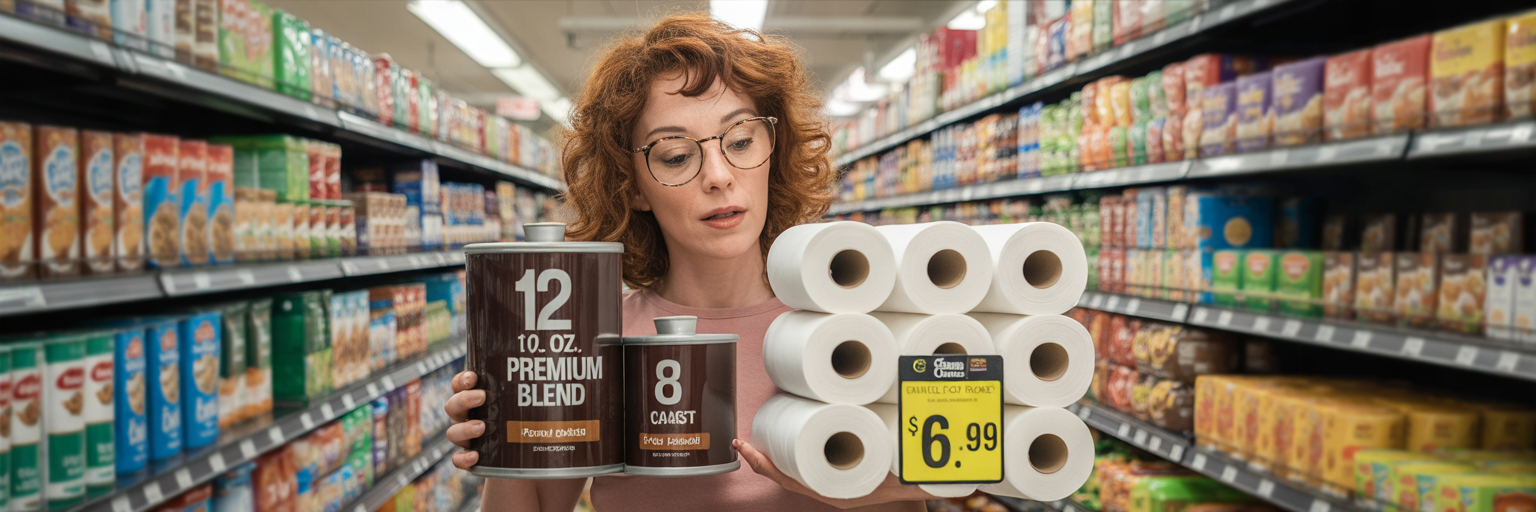
Walking down the center aisles reveals exactly where downsized grocery products are doing the most damage to your wallet. Major brands have aggressively targeted everyday essentials, focusing heavily on paper products, morning coffee, family snacks, and cleaning supplies. According to a recent analysis by the U.S. Government Accountability Office, per unit cost increases for downsized goods have surged by 12 percent for paper towels and up to 32 percent for coffee, turning basic daily routines into costly habits.
The assault on family pantries accelerated even further in 2025. Severe cuts to chocolate and confectionery pack sizes have driven per unit price increases past 100 percent on certain items. When you look at our breakdown of why grocery bills outrun family food plans, the math across fifty two weeks of shopping becomes undeniable:
- Paper goods depletion: Losing sheets per roll forces a family of four to buy three extra multipacks of paper towels annually just to maintain basic kitchen cleanup.
- Morning coffee markup: Shrinking canisters mean buying an extra tub every six weeks, silently adding nearly ninety dollars a year to a standard household caffeine habit.
- Snack pack shortfalls: Smaller chip bags and candy bars require parents to purchase double the volume to pack five days of school lunches.
| Grocery Category | Common Downsizing Tactic | Observed Per Unit Price Surge | Primary Household Impact |
|---|---|---|---|
| Paper Towels and Tissue | Reducing sheet count per roll while keeping multipack price flat | 12 percent | More frequent restocking trips for cleaning basics |
| Morning Coffee | Shrinking canisters by several ounces at the same shelf price | 32 percent | Higher daily cost per brewed cup at home |
| Chocolate and Confectionery | Cutting bar weights and multipack counts in 2025 | Over 100 percent | Steep markup on family treats and seasonal baking |
These hidden unit spikes quietly siphon hundreds of dollars a year away from hardworking parents without raising a single headline price tag.
Why Official Government Inflation Numbers Miss the Pain
While parents watch their food dollars vanish, Washington bureaucrats insist there is nothing to see here. A recent report from the U.S. Bureau of Labor Statistics claims that product downsizing adds a mere 0.01 percent annually to the Consumer Price Index. That staggering disconnect shows why working Americans no longer trust federal economic reporting.
The Statistical Illusion of the Federal Basket
The flaw lies in how government economists manipulate the math. Federal agencies dilute the sharp sting of smaller grocery packages by burying them inside a massive, standardized basket of thousands of infrequently purchased goods and services. As we exposed in our analysis of the costs CPI leaves out for working families, blending weekly food necessities with luxury electronics or commercial services masks the acute pain felt at the supermarket register every Friday.
Corporate Greed Rhetoric Versus Supply Chain Reality
Progressive politicians love to go on television and blame corporate greed alone for smaller cereal boxes. Sound conservative economic analysis recognizes the fuller reality. Food producers are getting hammered by persistent input cost surges from diesel fuel taxes, chronic labor shortages, and aggressive federal regulatory mandates. In our coverage of how small firms absorb or pass along inflation, we show that businesses face a brutal choice between direct sticker shock or package reductions. Working citizens righteously distrust Washington’s economic talking points when their grocery bags feel lighter every single week.
Packaging Tricks and the Patchwork of State Unit Price Laws
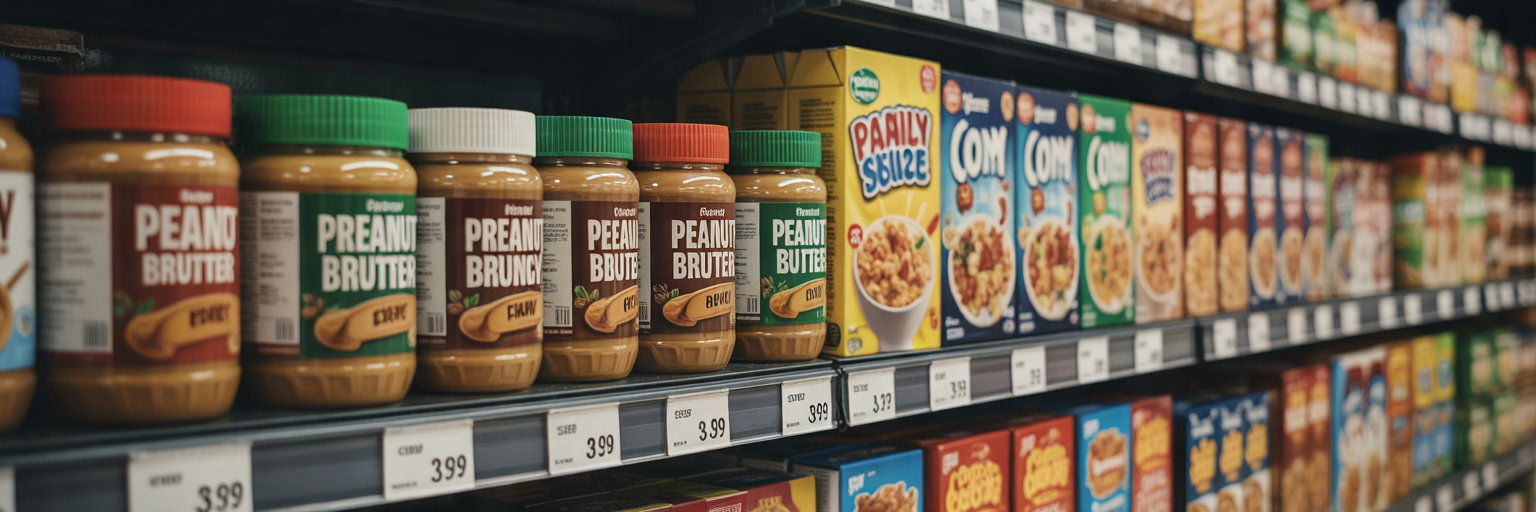
To keep consumers from noticing that choice, corporate packaging engineers deploy physical optical illusions right on the shelf. Manufacturers spend millions redesigning containers so they occupy the exact same visual footprint while holding significantly less food:
- Deepened jar indentations: Molding deeper cavities, known as punt bottoms, into the base of peanut butter and condiment jars hides a two ounce volume cut from the front view.
- Narrowed cereal boxes: Making cardboard boxes slightly taller and fractionally thinner preserves the front billboard size on the aisle while slashing net grain weight.
- Slack fill air pumping: Injecting extra nitrogen gas into potato chip and pretzel bags keeps the package feeling full and rigid despite holding fewer snacks.
- Distraction graphics: Slapping bright new color schemes or promotional family size banners onto shrunken boxes tricks hurried buyers into perceiving fresh value.
Spotting these structural tricks is much harder because the United States lacks uniform grocery unit pricing transparency. Currently, only nine states enforce mandatory unit pricing laws across retailers, while a handful of others maintain partial rules for select goods. Conservatives rightly reject heavy handed federal price controls, which inevitably trigger Venezuelan style supply shortages. However, free markets require basic honesty and state level accountability to function properly. When New Jersey fined a major retailer over 1.5 million dollars for inaccurate unit price shelf tags, it proved that enforcing truthful labeling works. Using resources like our free data guide for local cost watchers alongside honest shelf tags gives shoppers the raw data needed to punish deceptive brands.
Practical Ways American Families Can Beat Downsizing
Waiting around for Washington politicians to fix the economy is a losing strategy. Self reliant households can take immediate action to protect their paychecks by reviewing our parents checklist for managing price spikes and applying three disciplined habits on their very next supermarket run:
- Audit the shelf tag fine print: Ignore bright front of box marketing claims completely and strictly check the cost per ounce, cost per sheet, or cost per count printed in small font on the store shelf label.
- Run your own aisle math: If you shop in one of the forty one states without comprehensive unit pricing mandates, pull out your smartphone calculator to verify whether a bulk family box actually delivers a lower per ounce cost than two standard packages.
- Pivot to private labels: Make a permanent switch to store brand alternatives across your staple list. Private label goods carry zero national advertising overhead and historically lag far behind big food conglomerates in adopting deceptive downsizing practices.
Disciplined consumer choices and fierce free market competition will always punish deceptive corporate packaging far faster and more effectively than any federal bureaucracy.