When geopolitical instability chokes global shipping lanes, the shockwave hits suburban American driveways within days. With national gasoline averages hitting $4.48 per gallon in late 2026, working parents are discovering that foreign policy failures and restricted domestic production carry an immediate, punishing price tag.
Why Energy Inflation Explained Matters at the Pump
During the 1970s oil embargoes, blocks of stranded sedans proved how quickly foreign chaos humbles a superpower that refuses to drill its own reserves. Today, having energy inflation explained in plain terms requires looking directly at the intersection of weak Washington deterrence and rising gas prices 2026 commuters face every morning. This historic US oil supply disruption is a direct result of abandoning energy dominance while global adversaries test American resolve.
The Strait of Hormuz Crisis and Domestic Wallets
As detailed in USA Today reporting on how the Iran war is hurting US commuters, national retail gasoline averages have reached $4.48 per gallon, marking a brutal 43 percent surge in fill-up expenses compared to 2025. By November 2026, the average American household has already absorbed an extra $991.86 in motor fuel costs directly tied to the conflict with Iran and severely restricted transit through the Strait of Hormuz. This maritime chokepoint crisis has triggered the largest petroleum supply disruption in modern history, turning our ongoing consumer prices inflation analysis into an everyday survival guide for parents driving to work and school.
What Actually Drives the Retail Price of a Gallon
Left-wing pundits routinely blame domestic service stations and corporate greed whenever pump prices climb. Yet hard commodity data exposes that deflection. Crude oil alone accounts for 51.1 percent of the retail pump price, while complex refining, pipeline distribution, and local marketing make up the remainder. When foreign hostility chokes crude supply and domestic bureaucrats block American drilling permits, local gas stations have zero margin to absorb the global shock. When geopolitical deterrence and American energy independence falter, working commuters immediately pay the price at the pump.
How Surging Fuel Costs Act as a Regressive Tax on Working Households

While coastal media elites treat fuel surges as a gentle nudge toward public transit or green alternatives, heartland commuters do not have the luxury of riding a subway to a construction site or rural schoolhouse. Escalating household fuel expenses act as an inescapable, regressive tax that punishes the working class hardest. According to an Associated Press explainer on inflation and commuting costs, low and middle income families must allocate roughly 17 percent of their total household expenditures simply to cover basic transportation, while combined fuel and heating oil spikes strip an extra $100 to $400 every month from struggling budgets.
That financial pain multiplies once diesel inflation infects the commercial supply chain. Every tractor-trailer hauling beef, dairy, and produce across interstate highways passes its fuel surcharge directly to the consumer, which is exactly why grocery bills outrun family food plans across the country. Working families get hit from three distinct directions at once:
- Mandatory daily commuting fuel that consumes a massive share of after-tax take-home pay for suburban and rural workers who must drive to earn a living.
- Diesel-driven grocery freight markups that quietly inflate the price of every staple item sitting on supermarket shelves.
- Seasonal home heating oil surges that force northern and rural households to choose between warm bedrooms and other essential bills.
Dismissing these compounding hikes as minor inconveniences insults the intelligence of voters who watch their paychecks evaporate before Friday arrives. Checking our guide on how workers can measure pay against inflation reveals the hard truth: surging energy costs systematically erode the real wages and upward mobility of the American working class.
The Commuter Divide Between Family Trucks and Alternative Vehicles
The financial squeeze on the household ledger becomes even sharper when you step into the garage and look at the specific sheet metal parked in the driveway. Managing family commuting costs in late 2026 exposes a massive cultural and economic fault line between white-collar laptop workers and the traditional families who build, repair, and feed this nation.
Why Tradespeople and Large Families Bear the Brunt
Light-duty pickup owners, including parents and independent tradespeople driving a standard Ford F-150, are paying roughly $85 more every single month for gasoline than they did in 2025. While hybrid sedans and battery electric vehicles shield affluent suburban drivers from current pump volatility, they remain completely impractical for conservative working households. Steep upfront sticker prices, long-term battery replacement anxieties, and sparse rural charging grids mean a plumber hauling heavy copper pipe or a mother driving five kids to youth baseball cannot simply abandon internal combustion.
Calculating Your Exact Commuting Bleed
National percentage trends often mask how severely fuel spikes punish specific households. Calculating your exact budget bleed requires dividing your weekly round-trip mileage by your vehicle’s real-world highway efficiency, then multiplying that figure by the $4.48 gallon average. A contractor driving forty miles each way in a loaded pickup experiences a radically different economic reality than an urban analyst driving a compact crossover ten miles a day.
| Vehicle Category | 2026 Pump Price Impact | Primary Upfront Barrier | Practical Fit for Working Families |
|---|---|---|---|
| Light-Duty Pickup (e.g., Ford F-150) | Roughly $85 extra per month vs. 2025 | Moderate purchase price; high fuel exposure | Essential for tradespeople, towing, and rural work |
| Three-Row Family SUV | High monthly exposure at $4.48 per gallon | Moderate to high purchase price | Necessary for large families and youth sports carpools |
| Hybrid Sedan or Crossover | Moderated fuel cost spikes | Higher dealer markups and waitlists | Viable for suburban commuters with lighter cargo needs |
| Battery Electric Vehicle | Insulated from crude oil shocks | High sticker price and home charger install | Limited by rural range demands and rising grid rates |
This vehicle divide proves why green transition mandates fall flat outside metropolitan enclaves. Penalizing hydrocarbon fuels directly punishes the traditional tradespeople and large families whose daily obligations require real horsepower and cargo capacity.
Policy Clashes Over Transit Funding and Workplace Flexibility
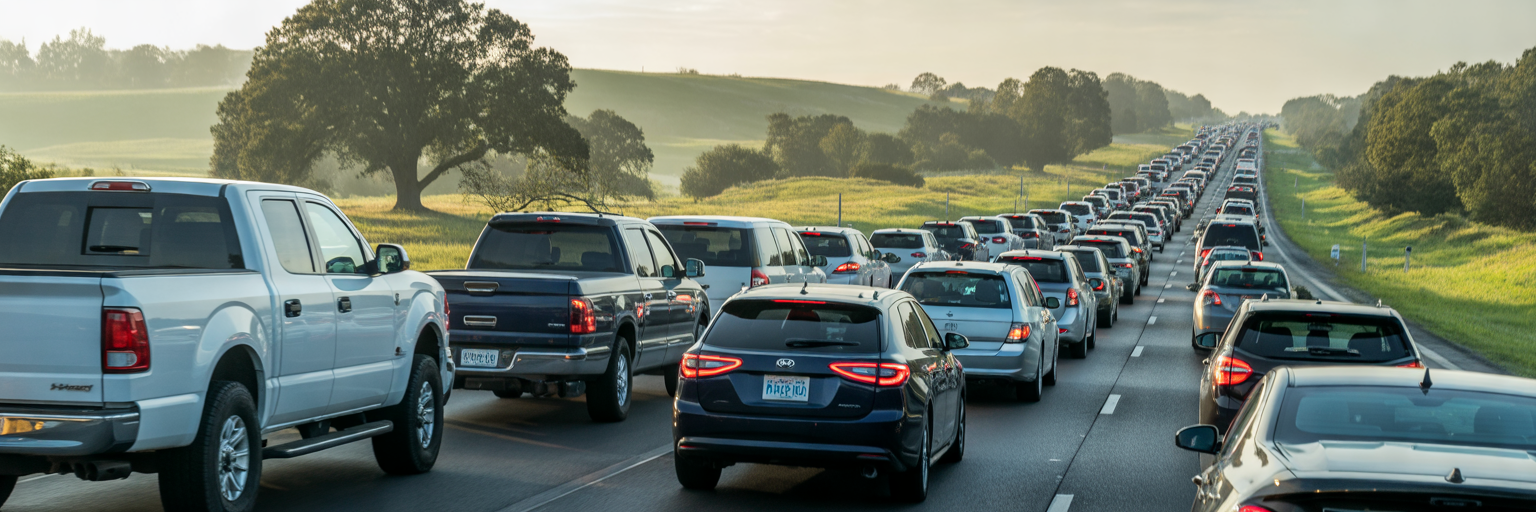
Because millions of working families cannot simply swap their work trucks for subsidized electric compacts, the burden shifts to how employers and lawmakers manage the daily commute. In the private sector, some corporations have introduced staggered shift schedules to help employees bypass fuel-wasting highway gridlock, alongside expanded remote work days. Yet these corporate perks highlight a glaring class divide. Electricians, manufacturing crews, hospital staff, and retail workers cannot perform their jobs from a living room laptop. When fixed housing overhead traps families far from urban job centers, as we detailed in our breakdown of why renters need an inflation calculator, physical attendance remains non-negotiable.
Meanwhile, Washington remains locked in an ideological battle over transportation infrastructure. Fiscal conservatives have recently advanced federal proposals to slash public transit funding by 23 percent, pushing back against urban planners who demand billions more for transit-oriented development and pedestrian bike lanes. This battle exposes a critical policy dilemma that right-leaning lawmakers must confront honestly. Cutting bloated, underutilized federal rail and bus budgets aligns with necessary fiscal restraint, as empty city buses do nothing to help a suburban machinist. However, pairing transit cuts with regulatory hostility toward domestic oil and gas leases leaves working drivers completely stranded. Without aggressive deregulation to unleash American shale, pipelines, and refinery capacity, everyday commuters are left trapped in expensive traffic with neither affordable fuel nor viable transit alternatives.
Practical Adjustments Families Are Making to Protect Their Budgets
Waiting on Washington politicians to reverse decades of energy mismanagement will not pay this Friday’s credit card bill. Market analysts project that cumulative household fuel costs stemming from the Middle East crisis will surpass $1,067 before the end of the fall season as Strait of Hormuz shipping bottlenecks persist. Rather than waiting for a government bailout, self-reliant conservative families are deploying immediate, disciplined countermeasures to protect their household solvency.
Immediate Tactics to Cut Weekly Mileage
Putting our parents checklist for managing price spikes into action starts right in the driveway. Families across the heartland are reclaiming control over their weekly mileage through five practical adjustments:
- Strict multi-stop errand consolidation that groups grocery runs, pharmacy pickups, and hardware store visits into a single warm-engine loop to eliminate high-consumption cold starts.
- Neighborhood school carpooling rotations where trusted local parents alternate morning drop-off and afternoon pickup duties, instantly cutting five weekly round trips down to one or two.
- Aggressive tire pressure and engine maintenance protocols, ensuring tires remain inflated to exact manufacturer specifications and replacing clogged air filters to protect highway fuel economy.
- Timing commutes around peak gridlock windows by negotiating thirty-minute shift adjustments to avoid idling in stop-and-go interstate bottlenecks.
- Auditing monthly digital subscriptions to ruthlessly cancel streaming services and unused apps, freeing up the exact $85 to $100 needed to cover the monthly truck fuel surge.
The Broader Pullback on Family Discretionary Spending
When five-dollar gasoline drains the checking account, cautious parents inevitably tighten the belt elsewhere. Local economies are already feeling the chill as working families scale back Friday night restaurant dinners, pass on out-of-state youth travel sports tournaments, and cancel autumn holiday road trips to preserve cash for Monday morning commutes. Disciplined household budgeting will carry resilient American families through this latest economic storm, but permanent relief at the pump demands a swift, unapologetic return to American energy dominance.