Contrasting Philosophies on Border Control
The transition of power in the White House has historically triggered profound shifts in U.S. border strategy. This pattern is starkly illustrated by the divergent paths of the Trump and Biden administrations, whose approaches are rooted in fundamentally different worldviews. Each presidency has reshaped the nation’s response to migration, creating a cycle of rapid adjustments for both migrants and border communities.
The Trump administration operated under an ‘America First’ doctrine, a philosophy that framed high levels of migration as a direct national security threat. This perspective justified a posture of maximum deterrence and zero tolerance enforcement. The core belief was that a restrictive and punitive system would discourage people from attempting to cross the border. For more background on this platform, you can explore our dedicated topic page on Donald Trump.
In direct contrast, the Biden administration entered office with the stated goal of building a ‘safe, orderly, and humane’ immigration system. This philosophy attempts to balance enforcement with addressing the root causes of migration, such as economic instability and violence in migrants’ home countries. It also aims to expand legal pathways for immigration, viewing them as a necessary component of a functional system.
These opposing ideologies create a powerful pendulum effect in US border security changes. With each new presidency, policies are dismantled and rebuilt, leading to confusion and instability at the border. This constant state of flux makes it difficult to establish any long term strategy, leaving enforcement agencies, humanitarian groups, and migrants themselves caught in a cycle of uncertainty.
Key Policy Differences in Migrant Processing and Asylum
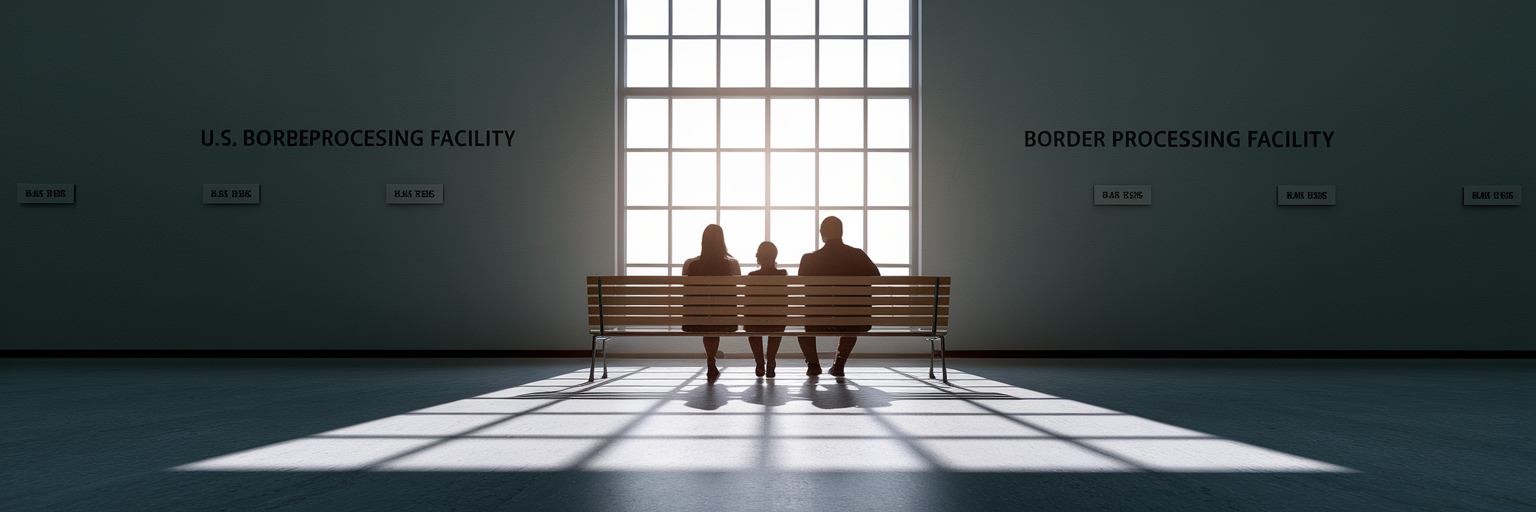
Moving beyond the guiding philosophies, the practical differences in how the Trump and Biden administrations handled migrant processing and asylum are most visible in three key policies. As a recent BBC report highlights, the Biden White House has taken dozens of actions aimed at reversing the policies of his predecessor, leading to a dramatically different landscape for asylum seekers.
Title 42: From Public Health Order to Expulsion Tool
Originally a little known public health statute from 1944, Title 42 was invoked by the Trump administration at the start of the COVID-19 pandemic. It was used to authorize the rapid expulsion of most migrants, including those seeking asylum, without the standard immigration court proceedings. The justification was to prevent the spread of the virus. This provided a clear Title 42 explained framework: it was a public health tool repurposed for immigration control. The Biden administration initially continued using the policy, drawing criticism from immigration advocates. It eventually ended Title 42 in May 2023, replacing it with a system that combines expanded legal pathways through the CBP One app with stricter penalties for those who cross without authorization.
The Migrant Protection Protocols (‘Remain in Mexico’)
The Migrant Protection Protocols (MPP), widely known as the ‘Remain in Mexico’ policy, was a cornerstone of the Trump administration’s deterrence strategy. It required asylum seekers to wait in Mexico for their U.S. immigration court dates, often in dangerous border towns with limited resources. The Biden administration moved to terminate the policy upon taking office, but this effort was tied up in a protracted legal battle. The Remain in Mexico policy status remained in limbo for months until the Supreme Court ultimately allowed the administration to end it. The logistical challenges of managing such policies are immense, sometimes leading to questionable spending, as seen in the controversy over a migrant housing contract that was later scrapped.
Family Separation and Reunification Efforts
Perhaps the most controversial policy was the Trump administration’s ‘zero tolerance’ approach, which led to the systematic separation of thousands of children from their parents at the border. The goal was to deter families from crossing illegally. The Biden administration officially ended the policy and established a task force dedicated to reuniting the separated families. However, it is important to note that family separations can still legally occur under specific circumstances, such as when there are concerns about the safety of the child.
| Policy | Trump Administration Approach | Biden Administration Approach |
|---|---|---|
| Title 42 | Used public health authority to rapidly expel most migrants, including asylum seekers, without a hearing. | Initially continued the policy, then terminated it and replaced it with a system of new legal pathways (CBP One app) and stricter penalties for unauthorized crossings. |
| Migrant Protection Protocols (MPP) / ‘Remain in Mexico’ | Required asylum seekers to wait in Mexico for the duration of their U.S. immigration court proceedings. | Formally terminated the policy, though implementation was delayed and complicated by court challenges. |
| Family Separation | Implemented a ‘zero-tolerance’ policy that systematically separated thousands of children from their parents at the border. | Officially ended the policy and created a task force to reunite families separated under the previous administration. |
This table summarizes the distinct operational approaches of the Trump and Biden administrations toward three of the most significant and controversial border policies of the last decade.
The Border Wall and Physical Infrastructure
Beyond processing policies, the most visible symbol of the Trump administration’s border strategy was the physical barrier itself. President Trump’s signature campaign promise to “build the wall” dominated political discourse and led to intense battles over funding. He ultimately used executive orders to divert billions in military funds toward the project after facing resistance in Congress.
During his term, approximately 458 miles of barrier were constructed along the U.S. Mexico border. However, the majority of this mileage involved replacing old, dilapidated fencing with new, more formidable structures, rather than building barriers in entirely new locations. The project was a massive undertaking that defined his presidency’s approach to border control.
Upon taking office, the Biden administration made an immediate and symbolic reversal. President Biden issued an executive order on his first day to halt all construction of the border wall, cancel the associated contracts, and begin the process of returning the diverted funds. This action was a clear rejection of his predecessor’s centerpiece policy.
However, the situation is more nuanced than a simple stop and start. Despite the administration’s official stance, some barrier construction has continued in certain areas. This is not a continuation of Trump’s project but a result of legal obligations. Congress had previously appropriated funds for specific segments of the wall, and the administration was legally required to use that money as designated, forcing its hand in a few limited cases.
Analyzing Enforcement Data and On-the-Ground Results

When comparing the Trump vs Biden immigration policies, it is essential to look beyond rhetoric and examine the on the ground results. A side by side policy comparison from the Peterson Institute for International Economics shows how the Trump administration appropriated billions for wall construction while the Biden administration halted it, but the impact on migration flows is complex. The illegal immigration statistics US officials report show significant fluctuations under both presidents, influenced by U.S. policy as well as external factors like political instability and climate events in other countries.
Under President Trump, border encounters initially dropped but later rose to significant levels toward the end of his term. This raises the question of whether his deterrence policies had a lasting impact or merely shifted migration patterns temporarily. Under President Biden, encounters reached record highs before declining following the implementation of new asylum rules.
The Biden administration’s strategy has been a combination of expanding legal pathways, like the CBP One app, while imposing stricter consequences for unauthorized crossings. The effectiveness of this dual approach remains a subject of intense debate. The political rhetoric surrounding these numbers often simplifies a complex reality, a dynamic visible in debates like the one involving Jasmine Crockett’s comments about Greg Abbott’s border actions.
In a significant strategic shift, President Biden recently issued a new executive order aimed at curbing high numbers of crossings. The Biden border executive order temporarily suspends asylum processing for most migrants when daily encounters exceed an average of 2,500. This move, which mirrors measures once proposed by the Trump administration, signals a pivot toward a more restrictive posture. Ultimately, defining “effectiveness” is difficult, as a secure border means something different to a border patrol agent than it does to a human rights advocate.
Divergent Political and Public Reactions
The starkly different border policies of the Trump and Biden administrations have fueled an equally polarized public and political response. The debate often splits along predictable party lines, but the views of those living at the border add a layer of complexity that is frequently overlooked in national conversations.
- The Republican and conservative perspective generally praised President Trump’s tough stance on enforcement. His supporters viewed policies like the border wall and ‘Remain in Mexico’ as necessary measures to secure the nation. They have heavily criticized the Biden administration’s approach, often framing the high number of migrant encounters as a self-inflicted “border crisis” and pointing to the use of humanitarian parole as a key problem.
- The Democratic and progressive viewpoint widely condemned Trump’s policies, particularly the family separation policy, as inhumane and contrary to American values. However, this coalition is not monolithic. While many Democrats support President Joe Biden‘s initial moves to create a more orderly system, progressives have criticized him for what they see as adopting overly restrictive measures, such as the recent asylum limitations.
- The perspective of border communities in states like Texas and Arizona is far from uniform. Residents and local officials experience the logistical and humanitarian challenges firsthand. Their opinions often defy simple partisan labels, with some calling for stricter enforcement while others focus on the need for more federal resources to manage the influx of migrants humanely and efficiently. Their reality is less about political talking points and more about the daily impact on their schools, hospitals, and public services.
Implications for the Future of US Immigration
The dramatic policy swings between the Trump and Biden administrations highlight a core vulnerability in the U.S. immigration system: a lack of long term stability. This constant pendulum, driven by executive actions, makes it nearly impossible to implement a sustainable, coherent strategy. Each new administration spends its first years dismantling the work of the last, ensuring that border policy remains in a perpetual state of reaction rather than proactive planning.
This cycle is a direct consequence of the U.S. Congress’s consistent failure to pass comprehensive immigration reform. In the absence of legislative solutions, presidents are forced to rely on executive orders and agency rule making, tools that are easily reversed by their successors. This turns the border into a political battleground that is re-fought every four years.
The fundamental tensions between national security, economic needs, and humanitarian values are not going away. As long as these issues remain unresolved by lawmakers, the comparison of Trump vs Biden immigration policies will continue to be a central theme in American politics. The future of U.S. immigration will likely be defined by this ongoing struggle, with the border serving as the stage for a much larger national debate. For continued coverage of these and other critical issues, you can explore more of our work on the Like A Boss homepage.